
You probably haven’t thought much today about the lights over your desk. Or the whir of the HVAC. Or the way sound reflects from the glass barrier three feet from your chair. But here’s the thing: your brain has a. All day long. Every. Single. Day.
Two of the most neglected determinants of how individuals feel, perform, and focus at work are workplace lighting and sound. Most offices get things wrong, not out of malicious intentions, but because these aspects are typically picked for cost and convenience, not for the people who have to live in them eight to ten hours a day.
This is beginning to change. And if you are responsible for a workspace, whether you are an architect, a facilities manager or business owner, commercial lighting is something to pay attention to.
The Problem With ‘Good Enough’ Office Lighting
Step into most commercial locations and you’ll see the same thing: rows of flat, cool white LED panels or fluorescent tubes beaming light downward at full intensity. It’s working. It’s brilliant. And that’s tiring after a while.
Historically, office lighting design has been quantified in lux levels, which is simply just “how much light is hitting the desk.” That’s a helpful start, but it misses the wider issue totally. The quality, colour temperature, direction and time of light all greatly affect how individuals feel over the day.
Harsh, cool-toned, overhead light at 6,000K is good at 10am when you need to focus. The same light around 4 pm, when your body is usually winding down, is working against your nature. That’s where human-centric lighting comes in. It’s a design approach that addresses not just visibility but how light interacts with our circadian rhythm.
Circadian lighting, sometimes termed biodynamic lighting, varies in color temperature and intensity throughout the day to help the body stay in step with its natural rhythm. Softer, brighter light in the morning and evening. Cooler, brighter task lighting during productive peak hours. The outcome is a workstation that is more natural to be in, because it is.
What Task Lighting Does Right: Productivity and Lighting
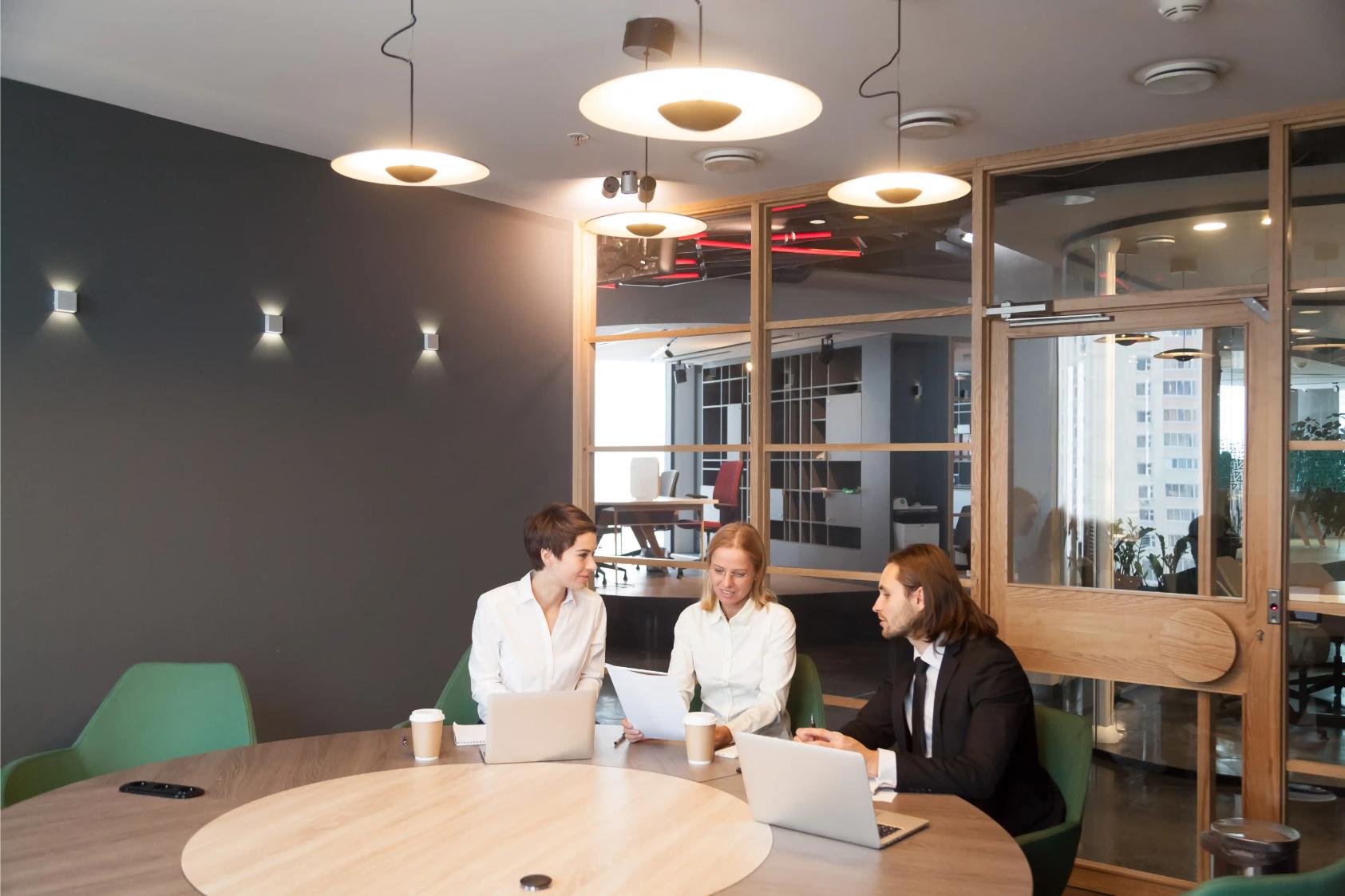
One change many progressive organizations are making is to move away from homogeneous overhead lighting to a layered office lighting design. This means a mix of ambient lighting (the overall fill), task lighting (directed light for specific work), and accent lighting (for visual interest and wayfinding).
Good task lighting minimizes eye strain, reduces glare on screens and offers people control over their immediate environment. That last bit is more important that many realize. Employees who are able to manage the light around their desk feel more comfortable and more in control. That little psychological triumph has a quantifiable influence on mood and output.e
If you’re outfitting a new space or upgrading an existing one, smart office lighting solutions now give teams the ability to regulate lighting zones, schedules and color temperatures using an app or automated sensor systems. The initial investment pays back in energy savings, and more significantly, in the people who use the space every day.
Sound. The Problem No One Is Discussing
Now let us hear about noise. Open-plan offices were supposed to foster collaboration. Instead, they often churn out a low-grade audio battleground. Voices overlap, laptops click, phones ring and there is always someone on a video conversation in the background.
Bad workplace acoustics have been shown to affect productivity. Research regularly shows that unwanted noise is one of the top concerns in open offices and a primary cause of reduced concentration and elevated stress. Noise pollution in the workplace is not only annoying. It costs a lot.
What’s intriguing is that the answer isn’t just to make things quieter. It is the purposeful design of sound. It is a combination of acoustic panels, sound-absorbing ceiling tiles, soft furnishings and strategic layout that manages the way sound travels through a space.
There’s a new category you need to be aware of, too: acoustic lighting. These are light fixtures that integrate sound absorption materials directly into the design, allowing a single installation to be two jobs at once. “Acoustic lighting is a really clever solution for open offices where there is limited wall or ceiling space for dedicated acoustic treatment and is being specified by more designers and fit-out teams.
Light, Sound, and the Big Picture
Workplace wellness is a genuine concern for organizations that want to recruit and retain good personnel. But wellness isn’t all standing desks and fruit bowls in the kitchen. The quality of light and sound control are elements of the sensory environment that are a basic part of how comfortable and functional it feels to operate in a room.
Biophilic lighting is a design style that introduces the principles of natural light into built surroundings. It has been found to alleviate stress, promote sleep, and help office workers focus. Natural acoustic textures such as wood, cloth and plants, absorb mid-frequency sounds and give warmth that rigid surfaces just can’t.
Today’s best working settings are not merely visually stunning. They are ready. They have been designed in the context of how people actually utilize the space, when they are at their most energetic and least energetic, where they need concentration and where they want social connection.
Making the Right Upgrade Decision
If your current workspace is lit by ancient fluorescent lights, without any acoustic treatment and individual environmental controls, then the distance between where you are and where you could be is huge. But it need not be closed at once.
Initiate an audit. Take a look at your existing business lighting installation and ask yourself the hard question: is it actually working for the people in the room, or just achieving minimal specification? Next look at the auditory environment. Where is noise a permanent problem? Where do individuals go to focus and why?
“Small, targeted upgrades can often have outsized results. Changing out old fixtures for LED office lights with dimming and colour temperature control can change the feeling of a place. Adding acoustic panels to a noisy collaboration zone can make it genuinely suitable for intense work.
The LightKart Can Get You There
The LightKart, is a specialist in workplace lighting solutions that are beyond the fundamentals. Our portfolio of human-centric and circadian lighting systems, smart office lighting controls and acoustic lighting solutions are designed for companies that care about the environment.
Whether you’re constructing a new office from start or upgrading an existing space, our staff will help you find the ideal match for your layout, budget and goals.
Browse our entire variety of office lighting solutions at thelightkart.com and let us assist you in creating a place where people will genuinely want to work.