
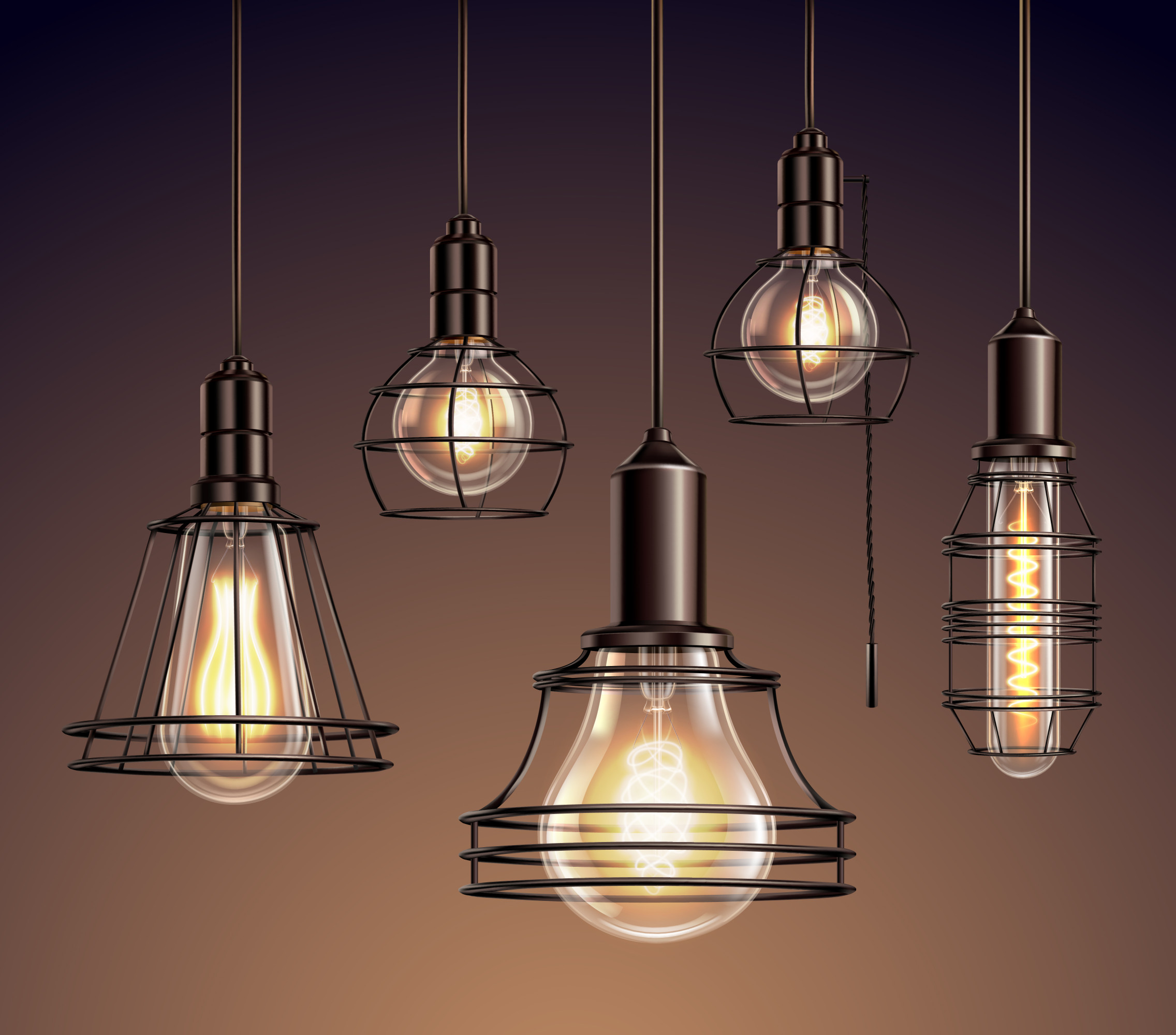
Pendant lighting is the jewellery of interior designing. It is elegant, expressive, and has the capability of elevating the entire aesthetics of your space. It translates the room from ordinary to something unforgettable, for you, as well as your visitors. Whether you are creating an inviting dining space or a stylish hallway, or a refreshing living space, pendant light can bring both functionality and beauty to your space.
The best part about choosing pendant lighting is that it works in almost every situation. The variety of light designs, from glass pendant lights to brass finishes, also offers you an opportunity to explore how you can change the mood of the room with just a simple choice. At The Light Kart, we have curated this perfect guide for pendant lighting to help you find the perfect fit for every corner of your house.
Best Pendant Lights For Kitchen Island
When you are selecting the best pendant light for your kitchen island installations, you should consider both form and function. Kitchen islands are usually the primary working area and require adequate lighting. Hence, here are the key factors you should consider for your pendant lights for kitchens.
- Size Matters : The general rule is that your pendant should be one-third the width of your island.
- Number of Fixtures : People typically go for a single pendant fixture if it is a smaller island, whereas a longer island may require more fixtures to ensure even lighting distribution.
- Height Placement : Hang your kitchen pendant light at least 30-36 inches above the countertop. This will provide adequate lighting without any obstruction at the height level.
- Style Selection : Make sure you attach your pendant to the kitchen aesthetics. Use industrial metal, steel, or brass finish look as it complements the modern and contemporary kitchen spaces. For traditional kitchens, you can use classic or bell-shaped fixtures.
Pendant Lighting Over Dining Table
Having a pendant lighting over dining table creates a perfect ambience. When you are choosing a pendant light over your dining table, make sure that it is ½ to ⅔ the width of your dining table. A chandelier style pendant or linear fixture works exceptionally well over rectangular tables. If you want to control the brightness in your dining area, install a dimmer switch for these pendant light fixtures as it will allow you to create bright lights for family meals and softer romantic ambience for evening entertaining.
Bedroom Pendant Lighting Ideas
Your bedroom is your personal sanctuary and deserves lighting that is not only calming but also makes it sparkle. Here are some of the best bedroom pendant lighting that you can get.
- Bedside Pendant Lighting: A suspended pendant over your bedside tables helps remove the clutter of a traditional lamp and creates a contemporary look. It frees up surface space and a balanced feel to the entire aesthetic of the room.
- Bedroom Ceiling Pendant Light: A central pendant fixture helps anchor the entire room and furniture together. You can also use layered lighting with wall scones or table lamps to add softness and flexibility.
- Statement Pendant Lighting: Use pendant lightings with woven rattan, colored glass on metallic shades so that it adds personality to the room.
Make sure that you hang your pendants around 25-45 cm above the bedside table for task lighting and for task lighting. However, while hanging a ceiling pendant light, it should be done in comparison with the height of the bed.
Entryway Pendant Lighting
Entryways are the first impression to your home and pendant lights can make a huge difference in how the exterior of your house is perceived. Entryway pendant lights create rhythm, drama, and welcome all in one.
- Repeating pendants: Try using repeating pendant lights for long corridors as it draws the eyes forward and adds structures.
- Statement piece: If you have high ceiling, then go with a chandelier style pendant lighting that becomes the focal area of the entryway.
- Use sturdier pendant lights for your entryway: It is better to use pendant lighting fixtures that are made from sturdier materials such as brass, steel, and other metallic materials.
Bathroom Pendant Lights
Bathroom pendant lights are an often-overlooked opportunity to add personality to such an important and utilitarian space. While people typically use vanity lighting or wall-mounted fixtures, hanging pendant lights can add unexpected elements to your bathroom.
- Over the tub: install pendant lights above a freestanding bathtub to create a spa-like atmosphere. Use fixtures that are rated well for damp locations and positioned in a way that it is away from direct water spray.
- Instead of using traditional vanity bars, you can use matching pendant lights for the space as it helps in creating a modern, transitional bathroom design.
It is important that whenever you are choosing a pendant light for your bathroom, you consult an electrician for proper placement relative to your water sources.
Choose a pendant light for every corner of your house from The Light Kart!
FAQs on Pendant Lighting
The number and placement of pendants over your kitchen or dining area is best determined by the size of the table and the island. Ideally, it is always better to use an odd number of pendants over any large object. This will allow the creation of a focal point and creates balance on each side. The placement, the spacing between each pendant will depend on the diameter of the pendant. Ideally, you want the space between each pendant to be the same as the diameter of each fixture.
Deciding the length of your pendant light is often a critical question when designing a room. However, this is largely dependent on your ceiling height. A simple way to get the perfect height is to measure the distance from the floor to your installation site and multiply the number of feet by 2 and 3. This represents the range in inches that is appropriate for the pendant height based on your ceiling height. For example, if your ceiling height is 7 feet, the range for pendant height should be around 14 to 21 inches.
Whenever you are choosing how small or how big your pendant fixture should be, it should always be in relationship with a primary object. It could be your kitchen island, a table, nightstand, or even a reading chair. If it is too small, it can feel like a placeholder, and if it’s too large, it can crowd the room, making it feel very heavy. Hence, you should always choose a size that correlates to the object but also leaves breathing room around the edges of the surface below.
Using one large pendant gives the vision of a clean aesthetic and can feel calm and sculptural, especially if you are using one over the dining table or a smaller island. However, multiple smaller pendants create an even light distribution and works better on longer surfaces. While it’s difficult to say which one is more correct or wrong, it depends on the mood and feeling you are going for.
Pendants have one stem, chain, or wire connection per bulb, whereas chandeliers are a little bit more elaborate and have multiple bulbs hanging from a single connection point. Chandeliers are great for ambient light or primary light source in a room, whereas pendant lighting is used more for accent and task lighting. Chandeliers are shorter and squatter, whereas pendant lighting can be taller and narrower.