
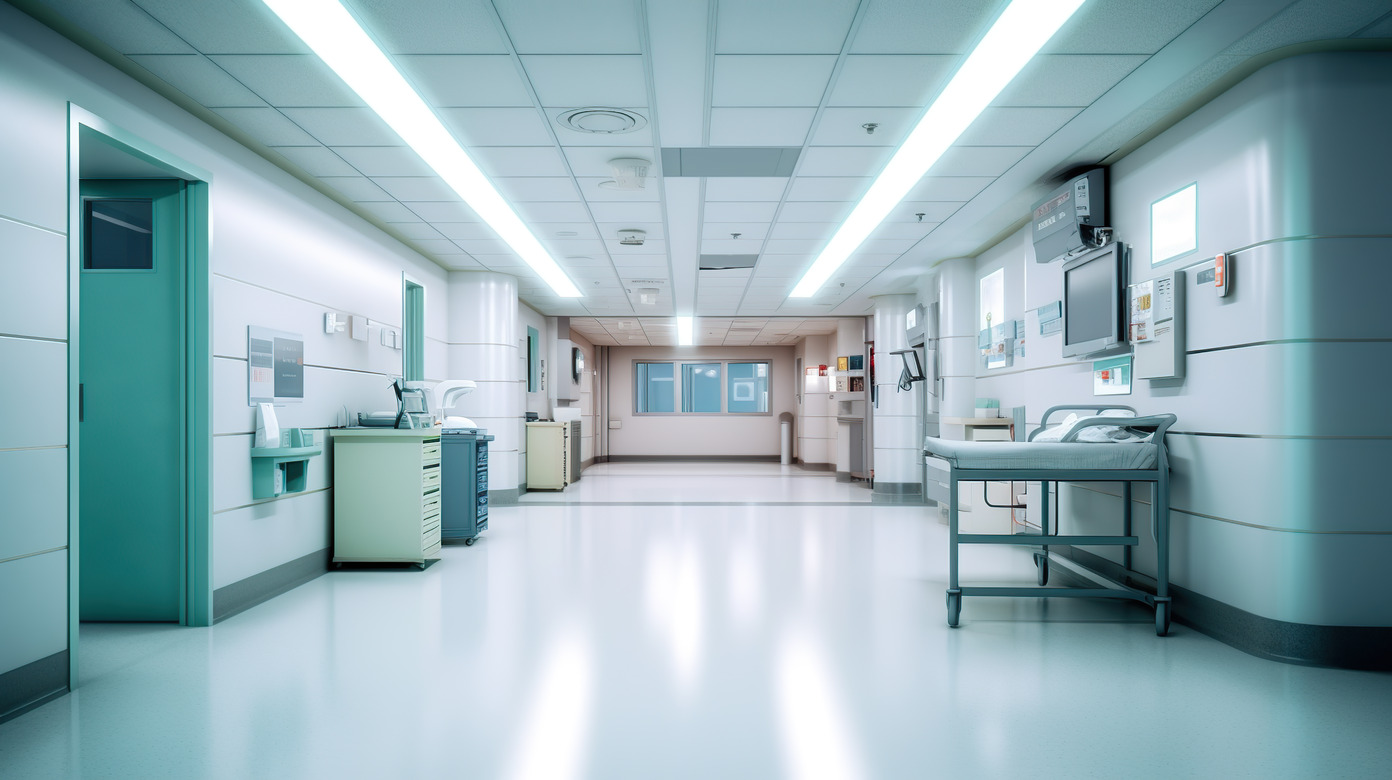
In any healthcare setting, lighting plays a very important and significant role for both aesthetics as well as functionality. Hospitals are not just places for treatments, rather they are a place where patients heal, staff work endlessly, and visitors seek comfort. As such, the lighting of the place plays a significant role in the well-being of the patients, the efficiency of the staff, and the overall atmosphere of the facility. Proper hospital lighting design is important for overall health outcomes. Hospital lighting design is an underestimated yet profoundly impactful element of healthcare facilities.
The science behind healthcare lighting solutions has evolved dramatically over the past few years. Proper research has been conducted to understand how lighting strategies can help with patient well-being, reduce patient anxiety, improve sleep patterns, and minimize medical errors. When designing a hospital, both designers and administrators plan facilities and renovations with the consideration of lighting, as it is a critical investment in both patient care and operation efficiency.
The Role of Lighting in Healthcare Environment
Lighting in any healthcare establishment, be it hospitals or clinics, has multiple purposes. It must provide adequate illumination for general and intricate medical tasks. It is critical for patient safety, their visibility, as well as their comfort and well-being. While hospital lighting is important for aesthetic, the main function is its functional objectives. The right lighting design can transform a sterile hospital environment into a warm, welcoming space that fosters healing and reduces stress.
The Foundation of Effective Hospital Lighting
Hospital lighting design must balance multiple demands. Unlike a commercial residential space, healthcare environments must prioritize safety during, must prioritize functionality and patient and visitor’s health care, health. Modern LED hospital lighting has helped revolutionize hospital and healthcare lighting. These lighting systems offer superior colour rendering that helps assess even the slightest change in patient’s skin tone and their condition. They also produce minimal heat and reduce cooling costs while allowing patient maximum level of comfort. Most importantly, LED technology also helps with precise control over both intensity and colour temperature through the day. As this LED lighting technology can be customized and controlled for different areas, it can easily support the biological needs for different kinds of patients that are admitted in the facility.
Lighting for Patient Room
Patient room lighting deserves special attention as this is a space where individuals spend majority of their time during their hospital stay. These rooms must transition seamlessly for the multiple functions such as clinical examinations, personal care activities, social visits, rest periods, as well as sleep. The most effective patient room lighting incorporates layered lighting that gives patients and the staff control over their environment. Ambient lighting provides general and broad-based illuminations without harsh shadow or glare. Task lighting helps medical staff to perform proper examination and procedures with precision. These lights can also be used to help patients engage in activities without disturbing others. Night lights ensure the proper safety during dark hours without disrupting sleep cycles. It is also important that the lights support the circadian rhythm of the patients as sleep is critical to their well-being. By providing cool and bright lights during morning and daytime hours and warmer dimmer lights in the evening, these systems help regulate the patient’s natural sleep-wake cycles. It is also suggested that natural light be used as much as possible because sunrays help in faster healing of the patients.
Lighting in Operation Rooms
Operating room lights are the most technically demanding area in any health care setting as these lights help with surgeries and major medical examinations. It must be shadow free and provide exceptional illumination with proper colour rendering so that surgeons can distinguish between different types of tissues and anatomical structure. Modern operating room lights use sophisticated optical systems that help to deliver intense and focus illumination with minimum heat generation. Operation areas also use multiple light heads that can be positioned at different angles to ensure no shadow is caused by surgical teams’ hands and instruments. Operating room lights also use adjustable colour temperature allowing the surgeons to control and customize lights based on personal preferences and the type of procedure. Beyond the primary surgical field, the overall operation operating room should be carefully planned with ambient lighting that prevents eye strain for the entire surgical team and maintains appropriate contrast with the surgical site.
Lighting for Common Areas and Corridors
Hallways, waiting rooms, and public spaces in hospitals help serve diverse populations with varying visual abilities and mobility levels. Lighting in these areas must ensure safe navigation while also creating a welcoming atmosphere. Uniform illumination levels prevent dangerous shadows and dark spots where falls might occur. It is also important that the colour temperature is warm as it creates a more inviting waiting area whereas, cooler temperature in corridors can promote alertness and activity. Strategic accent lighting can be used to highlight artwork, signage, and architectural features that help orient visitors in these confusing facility layouts.
Lighting in Emergency Departments
Healthcare lighting solutions in emergency areas should prioritize high colour rendering that are adjustable. These lightings must be able to support quick, accurate medical evaluation regardless of the time of the day. As emergency departments present unique lighting challenges, they must accommodate rapid assessment of patients arriving in various conditions. Examination areas should be bright and have consistent lighting that reveals clinical signages. The trauma bay should have shadow-free illumination similar to operating rooms. Lighting areas should also balance adequate visibility with a calming atmosphere.
Energy Efficiency and Sustainability
The transition to LED hospital lighting can help with operational benefits that go beyond clinical advantages. Hospitals use a lot of electricity and hence it is important to use LED lighting that can help consume less energy. These systems typically consume 50 to 70% less energy from traditional fluorescent or incandescent lighting alternatives. They also provide significantly longer lasting timing, reducing both utility cost and maintenance burdens. Smart lighting controls help with amplifying these benefits through occupancy sensing, daylight harvesting, and scheduled dimming. However, hospital designers must be careful while implementing these features to avoid compromising safety. For example, patient’s room should never automatically go dark, and critical areas should have overriding capabilities and not just rely on smart lights and technology.
Use of Smart Lighting in Hospitals
Using smart lighting systems in hospitals can help in multiple ways. Sensors and automations help detect occupancy, natural light levels, and movement, which can be used to address lighting in real time. It also helps customize the amount of light needed in particular areas depending on the occupancy. Many smart lighting systems are also connected via wireless systems, allowing them to be controlled remotely with mobile devices or integrated with other hospital systems. This allows for centralized management of lighting across the entire hospital, providing greater control and flexibility. Smart lighting control systems also use dynamic control over light intensity, colour temperature, and direction. This can be used to create tailored lighting environments that can be adjusted to meet the specific needs of patients, staff, and different areas within the hospital. Smart lighting systems should be integrated with other hospital systems such as heating, ventilation, and air conditioning, security, and patient monitoring systems. This helps create a cohesive and responsive environment that enhances overall hospital operation.
Implementing Considerations
Successful hospital lighting design needs proper collaboration between architects, lighting designers, healthcare administrators, clinical staff, and facilities managers. Understanding the needs and demands of each stakeholder helps in ensuring that the space has all the required benefits. Lighting specifications should account for maintenance realities as hospitals cannot spend a lot of time and money with on maintenance cost on maintenance such as bulb changing very regularly. The controls must be intuitive so that everyone in the staff can use it without specialized trainings. Materials and fixtures should also be of the highest quality so that they can withstand rigorous cleaning protocols and hospital grade disinfectants. Therefore, investing in superior healthcare lighting solutions helps improve patient outcomes, enhance staff satisfaction, and reduce energy cost.
Why Choose The Light Kart?
The Light Kart is a leading brand in India for all your lighting solutions. It not only supports shipping in Delhi and NCR, but across entire India. Lighting solutions from the Light Kart can be specifically customized to your needs, budget, and requirements. While we are an online store, we also offer consultations for any lighting needs and demands with scheduled visits. We work with lighting solutions such as smart lights, LEDs, automation products, chandeliers, pendant lights, and much more. If you are looking for hospital lighting designs and healthcare lighting solutions, you can get in touch with our team and lighting expert who can guide you through each and every step of the way.